Tokyo

tateishi

Tokyo's Last Showa-Era Drinking Town

Tateishi in Katsushika Ward is one of Tokyo's best-kept secrets — a labyrinthine alley district where time stopped sometime in the 1960s. Salarymen, locals, and in-the-know travelers pack into tiny standing bars for yakitori and cheap beer as dusk falls. No tourist crowds, no Instagram filters needed: this is the real Tokyo.

Sightseeing

The Classics

Yukes-u Nabe Alley (Senbeero Yokocho)

The narrow covered alley at the heart of Tateishi is lined with tiny bars where a 1,000-yen bill buys you a draft beer and several skewers. The retro signage, red lanterns, and shoulder-to-shoulder atmosphere are straight out of a 1960s film set.

💡 Arrive by 5 PM on weekdays to snag a stool before the after-work crowd floods in.
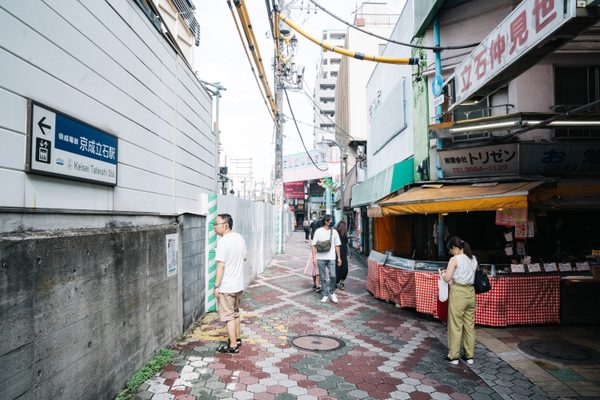
Tateishi Ginza Shopping Street

A classic shotengai (covered shopping arcade) stretching several hundred meters with old-school fishmongers, tofu makers, and confectionery shops that have been family-run for generations. A great place to watch daily local life unfold.

💡 Many shops close on Wednesdays, so plan your visit for other days of the week.

Katsushika Hachimangu Shrine

A quiet neighborhood shrine just a short walk from the drinking alleys, offering a peaceful contrast to the lively bar scene. The shrine has roots going back centuries and hosts a lively autumn festival each year.

💡 Visit in mid-October to catch the Reitaisai festival when the neighborhood truly comes alive.

Local Secrets

The Back Gate Alleys Behind Tateishi Station

Exit the station from the less-used north exit and explore the tangle of alleys behind it. You will find tiny one-counter bars run by elderly proprietors, some open since the 1950s, that rarely if ever appear in travel media.

💡 Look for handwritten cardboard signs on doors — these are the real local spots, not the ones with printed menus.

Showa-Era Hand-Painted Shop Signs

Scattered throughout the shopping street and surrounding blocks are hand-lettered shop signs and faded painted murals on building walls — a vanishing art form that graphic designers and photographers quietly seek out.

💡 Walk the back streets parallel to the main shotengai; the best examples are on side walls facing narrow alleys.

Standing-Only Liquor Shop Corners

Several old liquor retailers in the area allow customers to buy a beer or cup of sake and drink standing on the pavement outside — a perfectly legal and deeply local custom that predates the bar culture entirely.

💡 These spots are unmarked and informal; ask a local or just follow where the older men are congregating around 4 PM.

Food & Drink

The Classics

Yakitori at Tateishi's Charcoal Grill Bars

The alley bars of Tateishi are famous for their charcoal-grilled yakitori — chicken skewers brushed with sweet tare sauce or simply salted. Paired with a cold Hoppy (a low-alcohol beer-flavored drink beloved in the area), this is the definitive Tateishi meal.

💡 Order the negima (chicken and spring onion) and tsukune (chicken meatball) — they are almost always the house specialties.

Yanagi (柳) — Soba and Oden

A long-established neighborhood eatery near the station serving handmade soba and a rotating selection of oden (Japanese hot pot skewers in dashi broth). Prices are remarkably modest and portions are generous by Tokyo standards.

💡 The oden is only available in the colder months from roughly October through March.

Hoppy Culture

Tateishi is one of the last strongholds of Hoppy culture — a post-war drink where shochu (spirits) is topped with a malt-flavored non-alcoholic beer. Order 'naka' for a shochu refill and 'soto' for a Hoppy refill to drink like a true local.

💡 A full Hoppy set (glass, shochu, and Hoppy bottle) typically costs under 600 yen at most bars.

Local Secrets

Motsu-ni (Offal Stew) at the Counter Bars

Several tiny counter bars in the back alleys specialize in motsu-ni — a deeply savory miso-based stew of pork offal and konnyaku that has sustained laborers in this working-class district for decades. Not on any tourist map.

💡 It is typically served in a small clay pot. Ask for karashi (Japanese mustard) on the side to cut through the richness.

Old-School Kakigori Shaved Ice Shop

A traditional wagashi confectioner in the shotengai still makes kakigori (shaved ice) in summer using a hand-cranked machine and house-made syrup recipes unchanged for decades. Only locals know it exists.

💡 Open only in July and August, and only while supplies last — arrive before noon on hot days.

Garlic Stir-Fry Side Dishes at Late-Night Stalls

A handful of makeshift stalls near the alley entrance serve intensely garlicky stir-fried vegetables and tofu as bar snacks after 8 PM. These appear informally and are not advertised anywhere online.

💡 These stalls are cash-only and sometimes disappear for weeks at a time — treat finding one as a happy accident.

Where to Stay

The Classics

Super Hotel Kameido

A clean, modern business hotel at nearby Kameido Station (one stop from Tateishi), offering reliable amenities at budget-friendly prices. A practical base for exploring the Shitamachi area of eastern Tokyo.

Approx. 7,000–10,000 JPY per night

Toyoko Inn Kinshicho

Part of Japan's trusted budget hotel chain, located at Kinshicho Station with easy access to Tateishi via the Tobu Isesaki Line. Free breakfast is included and the rooms are compact but well-organized.

Approx. 6,500–9,000 JPY per night

Local Secrets

Local Guesthouse in Katsushika

A small number of privately run guesthouses and minpaku (home-share) lodgings operate in the Katsushika area, offering a rare chance to stay in a genuine Shitamachi residential neighborhood. Hosts are often long-time locals full of neighborhood knowledge.

Approx. 4,000–7,000 JPY per night depending on listing

Hidden Gems

Local Secrets

The 1,000-Yen Drinking Experience

Locals call it 'senbeero' — spending just 1,000 yen (about 7 USD) on a full evening of drinks and snacks. Tateishi may be the only place left in Tokyo where this is genuinely possible on any given weekday evening.

Neon Signs at Dusk

As the sun goes down, the handmade neon signs of the alley flicker on one by one. The warm glow against the darkening sky creates a cinematic atmosphere that photographers and filmmakers have quietly discovered.

Uncurated Local Human Drama

Tateishi is one of the few Tokyo neighborhoods where you can sit beside a retired factory worker, a night-shift nurse, and a jazz musician all at the same tiny counter, and nobody is performing for tourists. The authenticity is complete and unselfconscious.

Getting There

Take the Tobu Isesaki Line (also called the Tobu Skytree Line) from Asakusa Station or Oshiage (Tokyo Skytree) Station to Tateishi Station — approximately 15 minutes. The fare is around 200–250 JPY. Tateishi is also accessible from Kinshicho Station via the same line in about 10 minutes.

Best Time to Visit

Weekday evenings from 5 PM to 9 PM are the golden hours — workers flood in from nearby factories and offices, the bars fill up, and the energy is electric. Weekends are also lively but feel slightly more curated. Avoid national holidays if you want the authentic everyday atmosphere.

Local Tip

Do not take photos of people without asking — many regulars at these bars prefer to drink quietly without being documented. A simple smile and a 'shashin, ii desu ka?' (May I take a photo?) goes a long way. Also, most bars are cash-only, so carry small bills and coins.