Tokyo

ningyocho

Edo kabuki began here. The theatres were moved to Asakusa by the Tempo reforms, and what stayed behind was the name of the souvenir — dolls

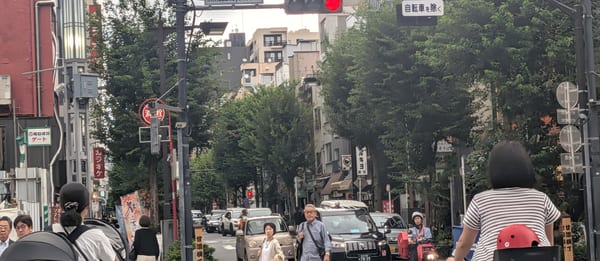
Ningyocho, Hamacho and Suitengumae are one walkable quarter; the stations are minutes apart. Amazake Yokocho, a street of some four hundred metres, runs between them. This was the theatre district of Edo. What remains now are old restaurants and shrines, wedged in among offices and housing.

Sightseeing

The Classics

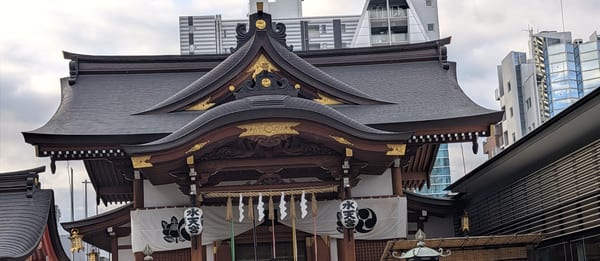
Suitengu

7min walk

A shrine for safe childbirth and for conceiving. It began in 1818, when Arima Yorinori, ninth lord of the Kurume domain, had the deity divided and installed at his Edo residence in Mita. People threw offerings over the wall in such numbers that the lord opened the gate to the public on the fifth of each month. In the Meiji years it moved to Aoyama, then here to Kakigaracho.

💡 Rebuilt in 2016; not just the hall but the whole precinct, approach and cloisters included, sits on base isolation. It fills on the days of the dog, when people come to pray for a safe birth.
Amazake Yokocho

6min walk

A street running about four hundred metres straight from the Meijiza to Ningyocho Station, lined with confectioners, tofu makers, soba houses and a shop for traditional footwear. The name comes from the Owariya, a sweet-sake shop that stood at the entrance in the early Meiji years. It closed around 1953, and only the name of the street stayed.

💡 Ten minutes to walk end to end. Many shops close on Sundays.

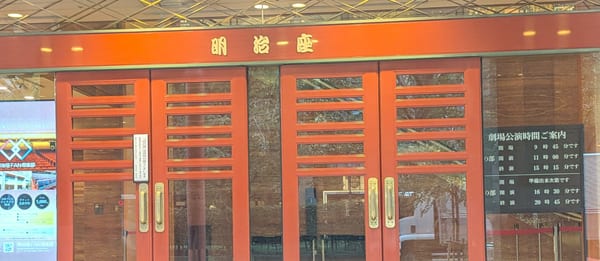
Meijiza

8min walk

A theatre that opened in 1873 as the Kishoza. It became the Hisamatsuza, then the Chitoseza, and in 1893 Ichikawa Sadanji the first bought it and gave it the name Meijiza. It is held to be the oldest commercial theatre in Tokyo.

💡 Check the programme and whether same-day tickets are available on the theatre's site. Amazake Yokocho begins at its front door.

Local Secrets

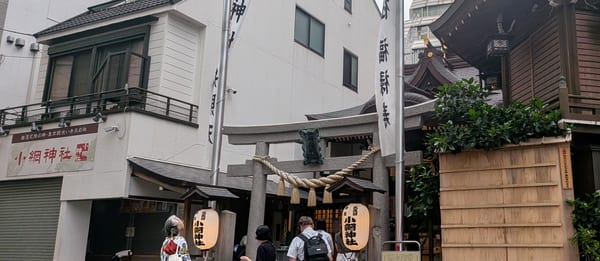
Koami Shrine

Koami Shrine

5min walk

Known as a shrine of strong fortune and warding off misfortune. The reasons given are that the object of worship was carried out to safety in the Great Kanto Earthquake, that the shrine came through the 1945 air raids unburnt, and that the soldiers who attended the departure rite here are said to have all returned alive. In the grounds is the Tokyo Zeniarai Benten, where money is washed.

💡 The grounds are very small. Numbers have risen in recent years and there is a queue even on weekdays. It spills onto the pavement, so stand where you are not blocking the way.

Hamacho Park

11min walk

A Chuo ward park facing the Sumida, with a sports ground and a gymnasium, and access out to the riverside terrace. It backs onto the Meijiza and serves as somewhere to pass the time before or after a performance.

💡 Ten minutes' walk from the station. The clearest route is to walk Amazake Yokocho to the Meijiza and carry straight on to the river.

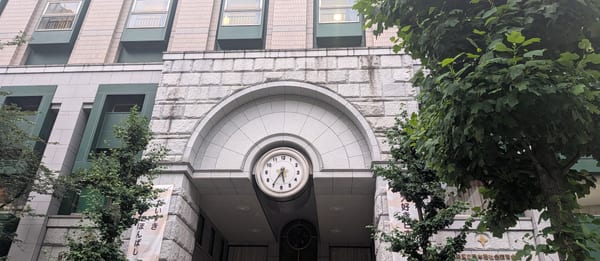
Nihonbashi Primary School

Nihonbashi Primary School

4min walk

One of the reconstruction schools built after the Great Kanto Earthquake — reinforced concrete, with an arch and a clock. The ward library and the social education hall occupy the same site.

💡 It is a working primary school. Look at the building from the street and do not enter the grounds; the library has its own entrance.

Food & Drink

The Classics

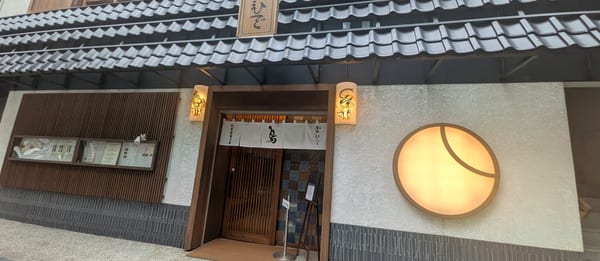
Tamahide

3min walk

A poultry restaurant founded in 1760. The first proprietor served the shogunal house as a falconer. The oyakodon is held to have been devised around 1891 by the fifth-generation mistress of the house, from the way customers were pouring the sukiyaki broth over rice with an egg. Neither sugar nor sake goes into that broth.

💡 It closed in June 2022 for rebuilding and reopened on 1 November 2025, so the building is new. Oyakodon at midday; the chicken sukiyaki and other dishes in the evening. One minute from exit A2 at Ningyocho.

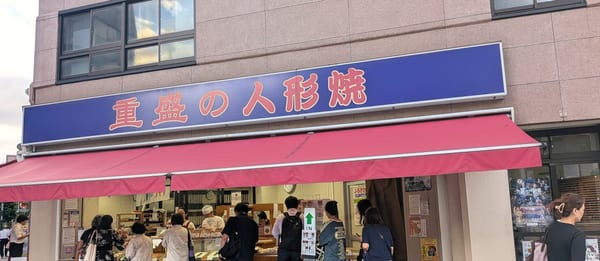
Shigemori Ningyoyaki

6min walk

A ningyoyaki shop founded in 1917. Thin skin, a lot of bean paste. It stands directly opposite Suitengu, and much of the trade is people buying on the way back from the shrine.

💡 You can watch them being baked from the street. When they sell out the shop closes early.

Local Secrets

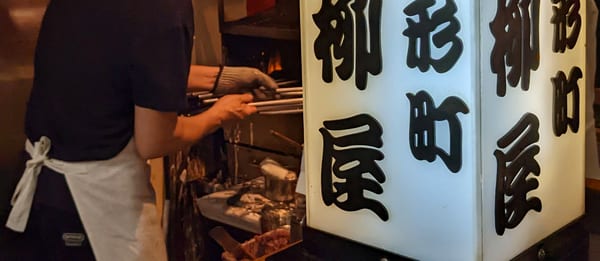
Yanagiya Taiyaki

Yanagiya Taiyaki

4min walk

A taiyaki shop founded in 1916, baking them one at a time in individual moulds. With Naniwaya Sohonten in Azabu-juban and Wakaba in Yotsuya it makes up what are called Tokyo's three great taiyaki.

💡 There is usually a queue, and you wait for them to come off the iron, so allow time. If you are taking them away, leave the bag open or the skin goes soft.

The Memory of This Town

The Theatres Left; the Name Stayed

Around 1624 Saruwaka Kanzaburo came down from Kyoto and opened the Saruwakaza here — later the Nakamuraza. Murayama Matasaburo followed with the Murayamaza, later the Ichimuraza. Edo kabuki starts here. Puppet troupes worked around the theatres, and shops selling doll work to the departing audiences grew up beside them. That is how the place came to be called Ningyocho, the doll district.

In the tenth month of 1841 a fire broke out at the Nakamuraza and took the Ichimuraza with it. The Tempo reforms were under way, and theatre was held to corrupt public morals. That December the two companies were ordered out to Shoten-cho in Asakusa. The following April the place they had been sent to was renamed Saruwaka-cho, after Saruwaka Kanzaburo. The ground the theatres were banished to was given the name of the man who had started them.

The theatres never came back. The name of the souvenir did stay, and ninety years later, in 1933, it became the official name of the district. The same thing has happened here twice. Amazake Yokocho takes its name from a sweet-sake shop, the Owariya, that stood at the entrance to the lane in the early Meiji years. That shop closed around 1953, and the name of the street stayed. Both times, it was the business that vanished and the name that remained.

  • Sakaicho and Fukiyacho stood around what is now Nihonbashi Ningyocho 3-chome. Marker boards for the sites of the Ichimuraza and the Nakamuraza stand nearby.
  • Saruwaka-cho is in what is now Asakusa 6-chome, Taito ward — north of Senso-ji, which the Asakusa page covers.

Through the Year

  1. Janearly month

    The Nihonbashi Seven Lucky Gods Circuit

    Koami Shrine, Suitengu and five others

    A New Year fixture; all seven shrines can be walked in two or three hours, and it is reckoned the shortest such circuit anywhere. Most people start at Koami. The seals can be had outside the New Year too, so going at another time avoids the crowds.

Dates shift from year to year. Check the shrine or organiser before you plan around one.

Where to Stay

Royal Park Hotel

10min walk

A large hotel connected directly to Suitengumae Station. The Tokyo City Air Terminal is next door, and the limousine buses for Narita and Haneda leave from there.

💡 If you are coming in by limousine bus from an airport, this is the clearest place in the district to get off.

Getting to Ningyocho

  • From Shibuya

    27 min · direct · Tokyo Metro Hanzomon Line · ¥210The Hanzomon runs through to Suitengumae. From there it is about two minutes on foot, above ground, to Ningyocho.

  • From Shinjuku

    28 min · 1 transfer (change at Bakuroyokoyama) · Toei Shinjuku Line → Toei Asakusa Line · ¥220

  • From Tokyo Station

    15 min · 1 transfer (change at Hatchobori) · JR Keiyo Line → Tokyo Metro Hibiya Line · ¥330The Keiyo line platforms at Tokyo Station are a long way from the gates. Walking the underground passage to Otemachi and taking the Hanzomon line to Suitengumae is the simpler option.

  • From Ueno

    6 min · direct · Tokyo Metro Hibiya Line · ¥180

  • From Ikebukuro

    33 min · 1 transfer (change at Ueno) · JR Yamanote Line → Tokyo Metro Hibiya Line · ¥390

  • From Shinagawa

    17 min · 1 transfer (change at Sengakuji) · Keikyu Main Line → Toei Asakusa Line · ¥370

  • From Narita Airport

    96 min · 2 transfers (change at Airport Terminal 2 and Aoto) · Keisei Main Line → Keisei Oshiage Line → Toei Asakusa Line · ¥1,220

  • From Haneda Airport

    38 min · 1 transfer (change at Hamamatsucho) · Tokyo Monorail → Toei Asakusa Line · ¥740You leave the monorail at Hamamatsucho and walk above ground to Daimon for the Asakusa line. They are not the same station, so allow time for the change.

Times are for a typical daytime weekday and fares are ordinary tickets, rounded. Both change — check a route planner on the day.

Getting There

Three stations serve this quarter: Ningyocho (Hibiya and Toei Asakusa lines), Suitengumae (Hanzomon line) and Hamacho (Toei Shinjuku line). Ningyocho and Suitengumae are not connected underground, so you walk above ground — but it is less than two hundred metres. Take Amazake Yokocho as your axis and the geography falls into place. From Ueno it is six minutes on the Hibiya line without changing. From Shibuya the Hanzomon line runs straight through to Suitengumae.

Best Time to Visit

Weekday mornings are when the shops on Amazake Yokocho are open and the street is not busy. Koami Shrine has grown crowded in recent years and often has a queue at weekends. Suitengu fills on the days of the dog, when people come to pray for a safe birth. At night everything but the restaurants closes and the streets go quiet.

Local Tip

Amazake Yokocho runs in one line from the Meijiza to Ningyocho Station; walk it end to end and you have the shape of the district. The old confectioners sometimes close early when they sell out, so if you are buying, come in the morning. The grounds at Koami Shrine are small and the queue spills onto the pavement — stand where you are not blocking the way.

What the Name Means

In the early Edo period the neighbouring wards of Sakaicho and Fukiyacho held two kabuki theatres, the Nakamuraza and the Ichimuraza, and puppet plays were staged here as well. Shops selling doll work as souvenirs multiplied around the audiences, and the street came to be called Ningyo-dori, the doll street, and the district Ningyocho. It became the official place name only in 1933.