Tokyo

hamamatsucho

Twenty-four minutes to Haneda, twenty-four hours to the islands — the station that faces the sea

Hamamatsucho is where the Tokyo Monorail begins: twenty-four minutes to Haneda Airport without changing trains. From the Takeshiba terminal, ships leave for the Izu and Ogasawara islands, and Chichijima is a full day away. Directly outside the station lies Kyu-Shiba-rikyu, a daimyo garden whose pond once took in seawater from Tokyo Bay; walk west and Tokyo Tower stands behind Zojoji, the Tokugawa family temple. It is an office district that happens to sit close to both the sea and the Edo period.

Sightseeing

The Classics

Kyu-Shiba-rikyu Gardens

Kyu-Shiba-rikyu Gardens

3min walk

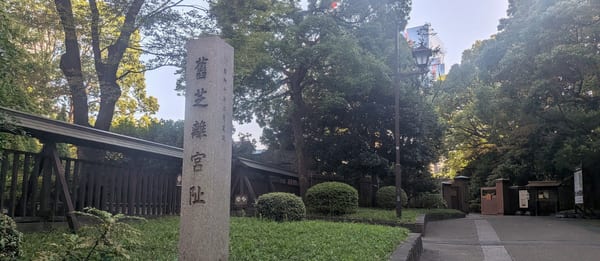
A daimyo garden directly outside the station. It was laid out from 1678 on land granted to the shogunal councillor Okubo Tadatomo, and its pond once drew seawater in from Tokyo Bay, rising and falling with the tide. Landfill closed it off from the sea and water quality ended the tidal system; the pond today is fresh water. The stonework and the shingle shore remain as they were when this was coast.

💡 Open 9:00–17:00 (last entry 16:30); there is an admission charge. Three minutes from the station, and a loop of the pond takes about half an hour.
Zojoji Temple

Zojoji Temple

14min walk

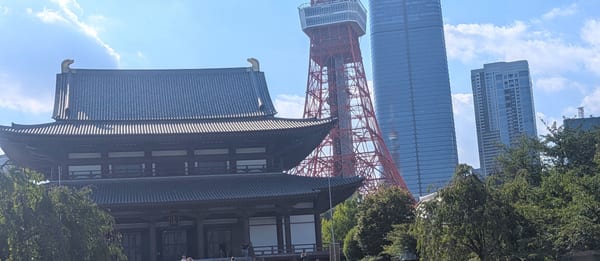
The Tokugawa family temple. Tokyo Tower rises directly behind the main hall, so the great wooden roof and the red steel lattice sit in one frame — a view that appears on its own as you walk up from the Hamamatsucho side. The Sangedatsumon gate dates from the early Edo period and survived the wartime air raids.

💡 A 14-minute walk from the station; the grounds are open through the day. For the shot with the tower, stand a little right of centre and the tower rises beside the roof.

Takeshiba Passenger Terminal

Takeshiba Passenger Terminal

9min walk

The port for ships to the Izu Islands and the Ogasawara Islands. Overnight sailings run to Oshima and Hachijojima, and Chichijima in the Ogasawaras is a full twenty-four hours away. This is effectively the only place in central Tokyo you can board a ship and leave for an island. A deck in front of the terminal looks out over the moored vessels and the far bank.

💡 A pedestrian deck runs to it directly from the station, so you stay dry in rain. You can walk onto the deck without boarding anything.

Local Secrets

Shiba Daijingu

Shiba Daijingu

8min walk

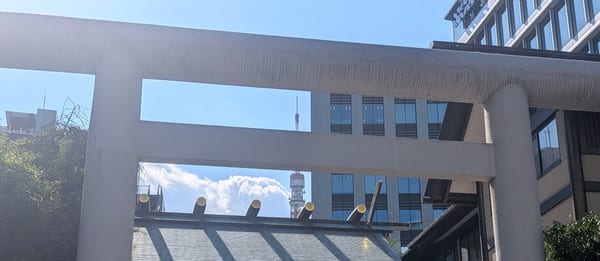
A shrine said to date from 1005. It enshrines the same two deities as the inner and outer shrines at Ise, which is why it has long been called the Ise of the Kanto. It sits at the top of a flight of stone steps, hemmed in by office buildings, so you cannot see the grounds from the street. It was also the setting of the Megumi brawl of 1805, a famous fight between firemen and sumo wrestlers.

💡 Open 9:00–17:00. Its festival, the Daradara Matsuri, runs eleven days from 11 to 21 September — see Through the Year below.

The waterfront at Hinode and Shibaura

The waterfront at Hinode and Shibaura

10min walk

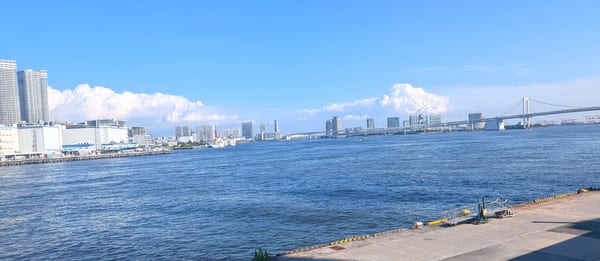
South of Takeshiba the waterfront runs on to Hinode Pier and Shibaura. Across the water stand the residential towers of Harumi and Kachidoki, with the Tokyo Skytree small in the distance behind them. That you can reach this view a few minutes out of an office district may be the best thing about this station. Water buses also leave from Hinode Pier.

💡 Late afternoon light catches the towers on the far bank. Decks and a promenade connect it all, so you can walk straight on from Takeshiba.

The Peeing Boy (platforms 3–4)

3min walk

A statue only a few tens of centimetres high, standing at the south end of platforms 3 and 4 at JR Hamamatsucho. It has been there since 1952, and a local volunteer group dresses it in a new outfit every month, keyed to the season or an event — so you are unlikely to see the same costume twice.

💡 It is inside the ticket gates, so you need to be changing trains or buy a platform ticket. Walk to the end of the platform and it is down by your feet.

Food & Drink

The Classics

Akitaya

Akitaya

4min walk

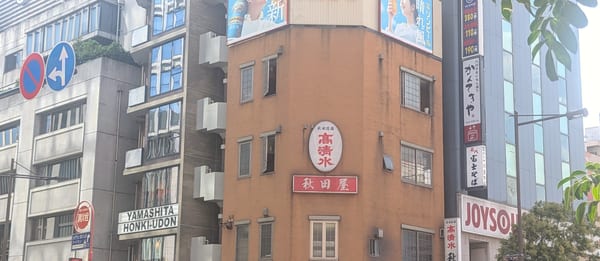
A motsu-yaki grill open since 1929. It opens at 15:30 and a queue forms before that. The house speciality is tataki, a minced skewer with cartilage worked through it, limited to one per customer. The tare sauce has been topped up rather than replaced for decades, and the fact that you can drink here from mid-afternoon says a good deal about this district.

💡 15:30–21:30. Mostly counter and standing room, and the turnover is quick. To avoid the crush, come right at opening or after 20:00.

Kyushu Jangara, Shiba-Daimon

Kyushu Jangara, Shiba-Daimon

6min walk

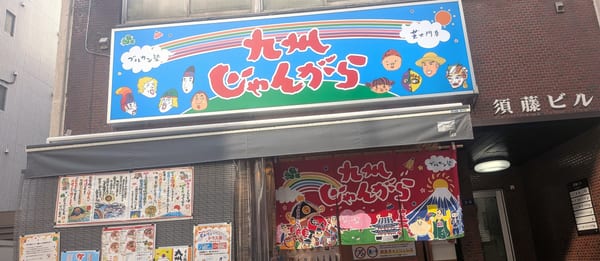
Tonkotsu ramen: a Kyushu pork-bone base built up in a Tokyo idiom with mentaiko and spicy mustard greens. The chain started in Harajuku in 1984 and this is one of its branches. It stays open until 22:00, useful when you are waiting on a boat or a flight.

💡 11:00–22:00. The loaded bowl with everything on it is the thing to order. It stands near the Shiba-Daimon crossing, on the way to Zojoji.

Shiba-Daimon Sarashina Nunoya

Shiba-Daimon Sarashina Nunoya

6min walk

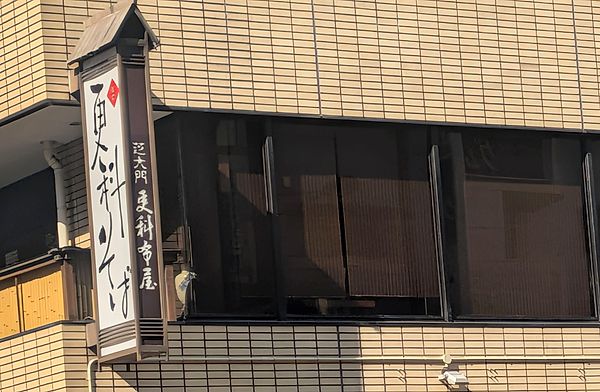
A soba house serving both the pale, refined sarashina noodles and a thicker rustic soba. It is on the third floor of an office building, and only the sign is visible from the street, which makes it easy to walk past. At lunch it fills with people who work nearby.

💡 Two sittings: 11:00–14:00 and 17:00–20:30. Late lunch or early evening is the quiet stretch.

Local Secrets

Ippekoppe (curry from the Aoki tonkatsu group)

Ippekoppe (curry from the Aoki tonkatsu group)

6min walk

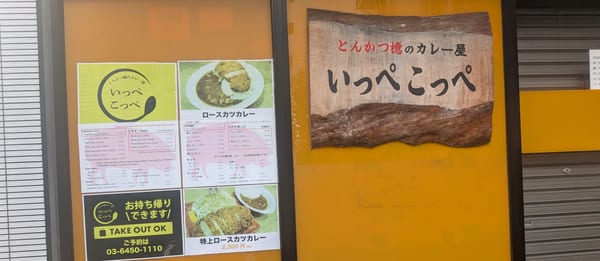
A curry shop run by Aoki, a tonkatsu specialist. A freshly fried cutlet goes on top of the curry, and you choose the breed and cut of pork. It is taken seriously as both a curry house and a katsu house, which is what people rate it for.

💡 11:00–14:30 and 17:00–20:00. A queue builds at lunch, so arriving at opening is the sure thing.

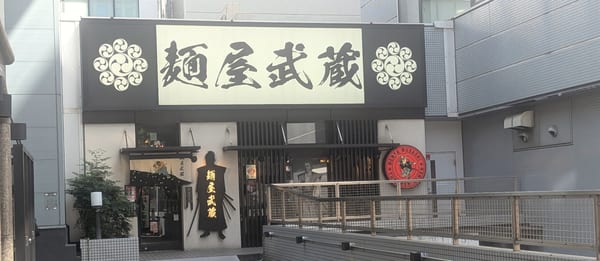
Menya Musashi, Hamamatsucho

Menya Musashi, Hamamatsucho

4min walk

The Hamamatsucho branch of a ramen shop that began in Shinjuku in 1996. The group deliberately varies the bowl from branch to branch, so the same name does not mean the same soup. Four minutes from the station, open past 22:00.

💡 11:15–22:15. Musashi branches each run their own limited bowls, so it is worth reading the ticket machine before you choose.

Shiba-Shinmei Eitaro

Shiba-Shinmei Eitaro

7min walk

A wagashi shop by the approach to Shiba Daijingu, carrying on the Eitaro name that dates back to Edo. It is known for Enoshima monaka wafers and obanyaki cakes. Plenty of people buy one to eat as they walk on from the shrine.

💡 9:00–19:00. Much of what it sells keeps well and travels, and it sits on the walking route between Zojoji and Shiba Daijingu.

The Memory of This Town

The garden that let the sea in

The pond at Kyu-Shiba-rikyu was once the sea. The garden itself stands on water. This stretch of shore was filled in during the 1650s, and in 1678 the shogunal councillor Okubo Tadatomo was granted the land; eight years later he laid out a garden here and called it Rakujuen, bringing gardeners up from Odawara to do it. Seawater was drawn into the pond from Tokyo Bay. When the tide rose the water rose with it; when it fell, the shingle shore came back into view. The shape of the garden changed twice a day.

Letting the sea into a garden is a luxury that lasts only as long as the sea is next door. In 1876 the garden passed to the Imperial Household Ministry and became the Shiba Detached Palace. The earthquake of 1923 burned the guest hall and the old cherry trees, and the following year it was granted to the City of Tokyo; it opened to the public on 20 April 1925. By then the ground east of the garden was being filled in, parcel by parcel. What settled the matter, though, was the water itself: effluent from nearby factories began entering the pond, and the tidal intake was closed off. The pond today is fresh water. Only the stonework and the shingle shore keep the shape they were given when the level still moved.

The sea was not driven out of the garden so much as moved east. What was filled in became Takeshiba, Hinode, Shibaura — and from the far end of it, ships still leave. To the Izu Islands, to the Ogasawaras; Chichijima is twenty-four hours away. A few hundred metres beyond the spot where a garden gave up the sea, Tokyo is still open to it. The pond holds its still water quietly.

  • Okubo Tadatomo was granted the land at Shiba-Kanasugi in 1678, and the garden was laid out as Rakujuen in 1686. It became the Shiba Detached Palace in 1876, was granted to the City of Tokyo in 1924, and opened as Kyu-Shiba-rikyu Gardens on 20 April 1925. It was designated a Place of Scenic Beauty in 1979.
  • The direct reason the tidal intake was stopped was effluent from nearby factories entering the pond.
  • This area was open sea until it was reclaimed during the Meireki era (1655–58).

Through the Year

  1. Septhe 11th to the 21st

    Daradara Matsuri (the Ginger Festival)

    Shiba Daijingu

    The shrine's annual festival, running eleven days from 11 to 21 September. The name comes from how long it dradles on — daradara — and it is also called the Ginger Festival because ginger is given out over the period. For these eleven days stalls line the stone steps and the approach between the office buildings.

Dates shift from year to year. Check the shrine or organiser before you plan around one.

After Dark

The lanes around Daimon

West of the station, in the streets running from the Daimon crossing towards Zojoji, old izakaya survive lane by lane. The crowd is mostly people finishing work, and after eight the volume changes.

Some places, Akitaya among them, open in the mid-afternoon, so an early start is possible.

The Takeshiba deck at night

The deck in front of the passenger terminal stays open after dark. Lights from the far bank and the Rainbow Bridge stretch out across the water, and there is wind. Almost nobody is there; it goes as quiet as if it were a different place from the daytime wharf.

On nights when a ship sails, one corner of the deck fills with queuing passengers and people seeing them off.

Where to Stay

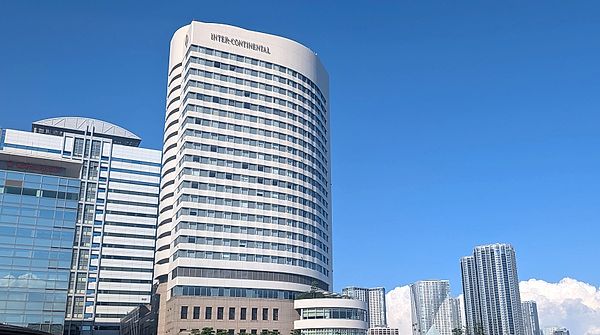
InterContinental Tokyo Bay

InterContinental Tokyo Bay

9min walk

A large hotel on the water at Takeshiba. Depending on which way the room faces, you get the Rainbow Bridge and Tokyo Bay, or Tokyo Tower. A pedestrian deck connects it to the station.

💡 The view is the point here, so it is worth confirming the orientation of the room when you book. The Takeshiba ferry terminal is a short walk away.

Rates vary by season — check a booking site

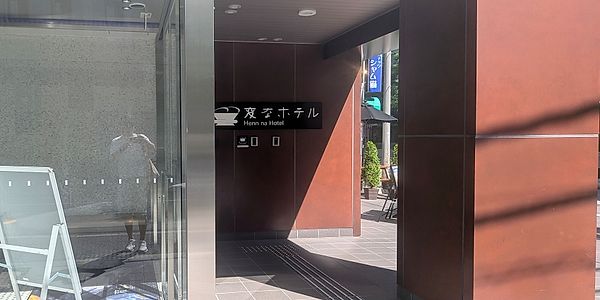
Henn na Hotel Tokyo Hamamatsucho

Henn na Hotel Tokyo Hamamatsucho

4min walk

A hotel with robots at reception. Check-in is done at a machine as a matter of course, with staff stepping in only when needed. Four minutes from the station, which is convenient if you want the first monorail out to Haneda.

💡 If you don't mind doing the formalities at a screen, it is priced modestly for this location. It suits a day with an early flight.

Rates vary by season — check a booking site

Getting to Hamamatsucho

  • From Shibuya

    20 min · direct · JR Yamanote Line · ¥260

  • From Shinjuku

    26 min · direct · JR Yamanote Line · ¥260Taking the Chuo Rapid to Kanda and changing there is a little quicker at about 23 minutes, but the Yamanote runs direct and you may get a seat.

  • From Tokyo Station

    6 min · direct · JR Keihin-Tohoku Line · ¥200The Yamanote takes seven. Either way it is two stops.

  • From Ueno

    12 min · direct · JR Keihin-Tohoku Line (rapid) · ¥210Outside rapid-service hours, the local train or the Yamanote takes about fourteen minutes.

  • From Ikebukuro

    31 min · direct · JR Yamanote Line · ¥350

  • From Shinagawa

    6 min · direct · JR Yamanote Line · ¥200

  • From Narita Airport

    80 min · 1 transfer (change at Nippori) · Keisei Skyliner → JR Yamanote Line · ¥2,780The Skyliner is all reserved seating. For a cheaper run, take a Keisei train that continues onto the Toei Asakusa Line as far as Daimon and walk through the underground passage to Hamamatsucho.

  • From Haneda Airport

    24 min · direct · Tokyo Monorail (Airport Rapid) · ¥520The monorail begins at this station, so from Haneda you simply stay on to the end of the line. The all-stations service takes about 32 minutes.

Times are for a typical daytime weekday and fares are ordinary tickets, rounded. Both change — check a route planner on the day.

Getting There

Hamamatsucho is served by the JR Yamanote and Keihin-Tohoku lines and by the Tokyo Monorail, which starts here and runs to Haneda Airport without a change. An underground passage links it to Daimon Station on the Toei Asakusa and Oedo lines, so in practice the two work as one station. A pedestrian deck runs from the station to the Takeshiba passenger terminal, meaning you can reach the port without getting wet. The west side, towards Daimon, holds the restaurants and the temples; the east side, towards Takeshiba, holds the water and the tall hotels.

Best Time to Visit

Weekday daytimes are busy with office workers and weekends are quiet. Kyu-Shiba-rikyu is open 9:00–17:00, so the garden belongs to the morning or the early afternoon. The waterfront looks best late in the day, when the sun catches the towers on the far bank. At night the Takeshiba deck empties out and becomes another place entirely. In mid-September, the Daradara festival at Shiba Daijingu lines the shrine approach with stalls for eleven days.

Local Tip

The restaurants here mostly serve office workers, and a good number close on Sundays and public holidays; check what is open before a weekend meal. Decks and underground passages connect the station to Takeshiba and to Daimon, and they are often faster than walking at street level. The observatory in the World Trade Center Building closed in 2021 and the building has been demolished; the site is under construction and the new building is due to open from 2027. There is no view to go up for.

What the Name Means

In 1696 a man called Gonbei, who came from Hamamatsu in Enshu — the western part of today's Shizuoka — served as headman of this town, and the town took the name Hamamatsucho from him. It has nothing to do with pines by the shore, as the characters might suggest.