Tokyo

oshiage

Until 2012 the station at the foot of the tower was called Narihira-bashi, after a poet who stopped at this river and asked a bird about the city he had left.

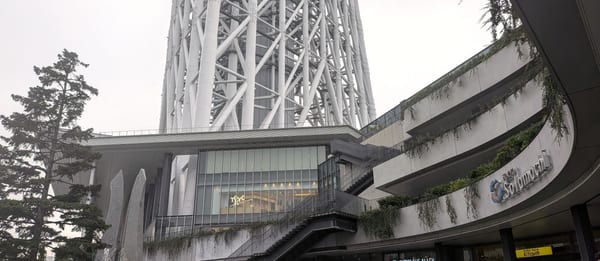
Oshiage is the neighbourhood that grew up around Tokyo Skytree, Japan's tallest structure at 634 metres. Just a short walk from the tower, the old shitamachi streets of Hikifune and Kyojima still pulse with the everyday rhythms of Tokyo life. It is a rare place where a futuristic landmark and a lived-in downtown coexist side by side.

Sightseeing

The Classics

Tokyo Skytree

Tokyo Skytree

4min walk

At 634 m, Tokyo Skytree is the tallest tower in the world and the tallest structure in Japan. The Tembo Deck at 350 m and the Tembo Galleria at 450 m offer sweeping panoramas of the Kanto plain, and on clear winter days Mount Fuji is visible on the horizon.

💡 Book tickets online in advance to skip the queues. Sunrise and dusk slots sell out fastest, so reserve at least a week ahead.
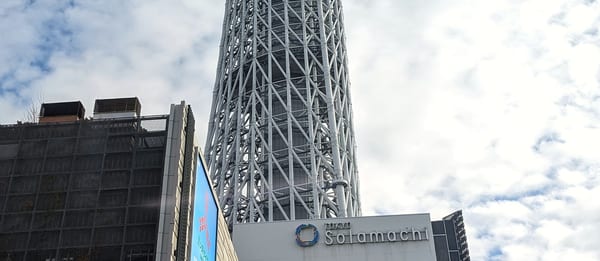
Tokyo Solamachi

3min walk

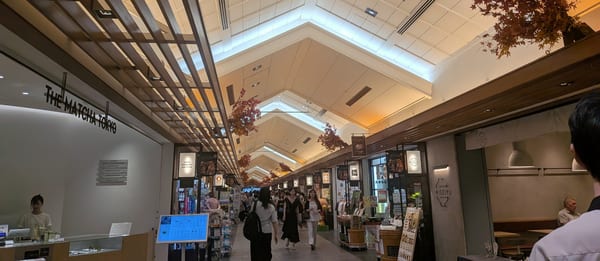
The 300-plus-shop commercial complex at the base of Skytree houses regional food halls, pop-culture merchandise, and the Sumida Aquarium. The basement food floor is especially popular for its Tokyo-only sweets and bento.

💡 The west-side 4th-floor open terrace gives you a free, up-close look at the Skytree base and is a great spot for photos without fighting crowds.

Sumida Park

19min walk

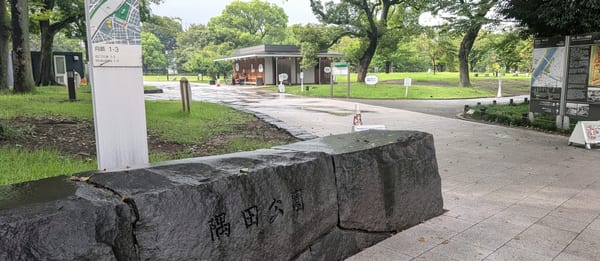
A park along both banks of the Sumida. The cherries come out in spring, and it is known as the place where the Skytree, the blossom and the water go into a single frame.

💡 During cherry-blossom season, the north bank (Taito-side) is less crowded than the Sumida-side. Arrive before 8 am for a quiet stroll and the best light for photos.

Local Secrets

Kyojima neighbourhood streets

16min walk

Kyojima, about ten minutes' walk east of the Skytree, still has its wooden houses and narrow lanes. The area escaped the fires of both the Great Kanto Earthquake and the 1945 air raids; the streets stayed narrow, and a good many of them are dead ends. There are tofu makers, a bathhouse, and small shrines tucked into corners of the lanes.

💡 Walk along Kyojima 3-chome on a weekday morning when locals do their shopping. There are no tourist signs here — just bring a sense of curiosity.

Hikifune Sakura-dori

This quiet street running through Hikifune is lined with cherry trees and is almost entirely unknown to tourists. During blossom season it becomes a tunnel of pink, enjoyed almost exclusively by local residents and their dogs.

💡 The street is at its best in the evening when warm street-lamp light catches the blossoms. Come mid-week to avoid even the small local crowds.

Oshiage station underpass murals

1min walk

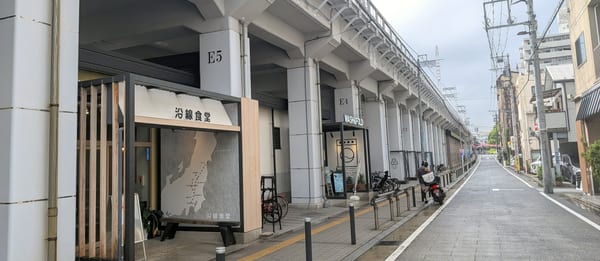
The pedestrian underpass connecting Oshiage station to the Skytree entrance features large-scale illustrated murals depicting the history and traditional crafts of the Sumida district. Most visitors walk straight past without noticing.

💡 Slow down and read the Japanese captions — they contain fascinating details about Edo-period artisans who once worked in this exact area.

Mukojima Hyakka-en garden

26min walk

A garden laid out in 1804 by Sahara Kikuu, an Edo merchant, with help from the writers and painters he kept company with; few private gardens of the Edo period survive. Admission is 150 yen, among the cheapest of the metropolitan gardens.

Oshiage shotengai (old shopping street)

2min walk

The covered shopping street running north from Oshiage Station has butchers, rice merchants and hardware shops. A few minutes' walk from the foot of the tower is enough for the kinds of shop on the street to change entirely.

Food & Drink

The Classics

Chanko-nabe restaurants near Ryogoku

Chanko-nabe restaurants near Ryogoku

42min walk

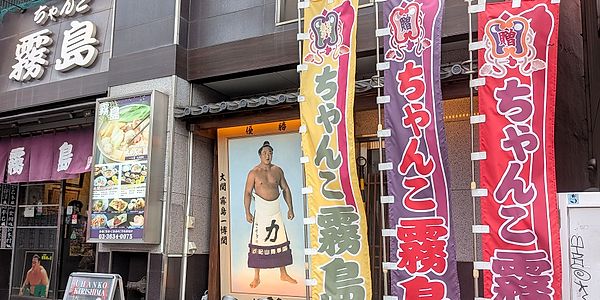
Three stops from Oshiage, in Ryogoku, there are a number of chanko restaurants run by former wrestlers. It is a pot of vegetables and tofu in chicken or pork stock — what the stables have eaten day to day.

💡 Chanko-nabe Yoshiba occupies the building of a former sumo stable, unaltered. Dinner needs a reservation.

Local Secrets

Sumida River Brewing (craft beer)

19min walk

Its full name is TOKYO Sumidagawa Brewing. It is a brewery and restaurant on the second floor of the Annex building in the Asahi Beer complex at Azumabashi, beside the block that carries Philippe Starck's golden object. Just under twenty minutes' walk along the river from Solamachi. The beers are named after the Sumida, and the river is in view from the seats.

💡 The tasting flight of four small pours is the best way to sample the range. The weizen-style 『Sumida White』 is the most approachable for first-timers.

The Memory of This Town

The Place Where Someone Asked a Bird

Until 17 March 2012 the station at the foot of the tower was called Narihira-bashi. The name comes from Ariwara no Narihira, a poet of the early Heian court, and from an episode in the Tales of Ise in which he travels east, away from the capital, and stops at the Sumida. He sees a bird the boatman calls a miyako-dori, a capital-bird, and he puts a question to it: if you carry that name, then tell me — is the person I think of alive or not.

The verb in that poem is kototou, to ask. It stayed in the ground here. A dumpling shop by the river took the name Kototoi, and from the shop it passed to the bridge and then to the avenue, so that Kototoi-bashi and Kototoi-dōri are, in the end, named after a question asked of a gull about eleven hundred years ago. The bird itself is still around: the miyako-dori is understood to be the black-headed gull, which is now the official bird of Tokyo.

The ground the tower stands on has a shorter memory. It was a rail freight yard — the busiest of any private-railway goods station in Tokyo — which closed in 2003, next to a plant that had been turning out ready-mixed concrete since 1949 and stopped in 2007. Two flat, working lots. When the tower went up on them it was given a height of 634 metres, chosen because the digits can be read mu-sa-shi, the old name of this province. So the new thing is named after the old land, and the poet's name came off the station sign in the same year it opened.

  • The poem is from chapter nine of the Tales of Ise: na ni shi owaba / iza kototowan / miyakodori / waga omou hito wa / ari ya nashi ya to.
  • The freight yard closed in 2003; the concrete plant ran until 2007. The tower opened in 2012.

Through the Year

  1. Marlate month into early April

    The Cherry Season

    Hikifune Sakura-dori

    A street through housing north of the Skytree, with branches reaching in from both sides. It is not a sight, so there are no stalls and no barriers; the blossom comes over the front of houses with washing hung out.

  2. Julthe last Saturday

    Sumida River Fireworks

    Sumida River

    They are launched nearer Asakusa but can be seen from the Oshiage side. On the day, movement in and out of the station is restricted and simply walking near Solamachi takes time. Expect the trains home to be slow.

  3. Sepmid-month

    The Shrine Festival

    Ushijima Shrine

    Taken as the start of autumn in Sumida. Each neighbourhood association in Oshiage puts on its dedicatory dancing in the evening. In the years of the great festival, held once in five, a procession led by an ox-drawn palanquin covers the parish over a route of some thirty-five kilometres.

Dates shift from year to year. Check the shrine or organiser before you plan around one.

Where to Stay

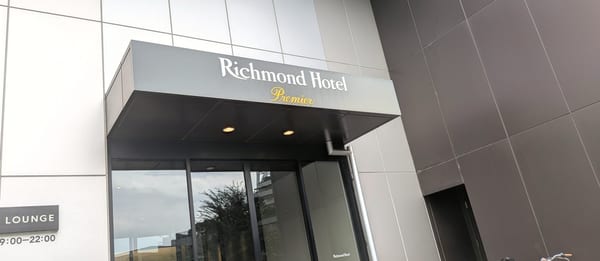
Richmond Hotel Premier Tokyo Scale

1min walk

Effectively at the station exit, one minute on foot, and directly beneath the Skytree. Rooms are larger than the Richmond standard and the tower fills the window on the right side of the building.

💡 Ask for a Skytree-facing room when booking; the difference is considerable.

Approximately ¥20,000–35,000 per night for a standard double, varying by season.

Nui. Hostel and Bar Lounge (Kuramae)

32min walk

A 30-minute walk or 10-minute cycle from Oshiage (or two stops on the Toei Asakusa line), Nui. is one of Tokyo's most design-forward hostels, built inside a renovated warehouse in the artisan district of Kuramae. Private rooms and dormitory bunks are both available.

Dormitory bunks from approximately ¥3,500 per night; private rooms from approximately ¥10,000.

Getting to Oshiage

  • From Shibuya

    31 min · direct · Tokyo Metro Hanzomon Line · ¥260

  • From Shinjuku

    31 min · 1 transfer (change at Sumiyoshi) · Toei Shinjuku Line → Tokyo Metro Hanzomon Line · ¥330

  • From Tokyo Station

    24 min · 1 transfer (change at Otemachi) · Tokyo Metro Marunouchi Line → Tokyo Metro Hanzomon Line · ¥210

  • From Ueno

    17 min · 1 transfer (change at Asakusa) · Tokyo Metro Ginza Line → Toei Asakusa Line · ¥290

  • From Ikebukuro

    38 min · 1 transfer (change at Otemachi) · Tokyo Metro Marunouchi Line → Tokyo Metro Hanzomon Line · ¥260

  • From Shinagawa

    26 min · direct · Keikyu Main Line (Airport Ltd. Exp., through service) · ¥430

  • From Narita Airport

    53 min · 1 transfer (change at Aoto) · Keisei Skyliner → Keisei Oshiage Line · ¥2,240Fast, but ¥2,244 including the limited express fee. The Access Express through onto the Toei Asakusa line is cheaper if you have time.

  • From Haneda Airport

    48 min · 1 transfer (change at Hamamatsucho / Daimon) · Tokyo Monorail → Toei Asakusa Line · ¥740

Times are for a typical daytime weekday and fares are ordinary tickets, rounded. Both change — check a route planner on the day.

Getting There

Oshiage (Skytree) is served by four lines: the Tokyo Metro Hanzomon line, the Toei Asakusa line, the Tobu Skytree line and the Keisei Oshiage line. The Hanzomon line runs from Shibuya (about 30 minutes) — note it does not reach Shinjuku, so from there change at Otemachi or Kudanshita. Tokyo Skytree Station on the Tobu line, about 5 minutes from Asakusa, is the other option. From Haneda, Keikyu trains run through onto the Toei Asakusa line without a change, roughly 45 minutes; from Narita, Keisei's Access Express connects via the same through service.

Best Time to Visit

Late March to early April brings iconic cherry blossoms along the Sumida River, combining beautifully with Skytree views. Late November to early December offers clear, dry air and the best visibility from the observation decks, with frequent views of Mount Fuji. Summer evenings feature outdoor festivals along the river and the annual Sumidagawa Fireworks in late July.

Local Tip

The Skytree tower changes its LED illumination colour every night, cycling between three themes — 『Iki』 (indigo blue), 『Miyabi』 (purple), and special seasonal schemes. Check the official calendar before your visit and plan a riverside stroll at dusk to see the tower light up — the reflection on the Sumida River doubles the effect.

What the Name Means

The characters read as pushing up. The origin is disputed: some accounts say the tide pushed silt up to make the land, others that floods pushed the earth up here. They agree at least that it was water, not people, doing the pushing.