On 14 October 1872, Japan's first railway opened between Shimbashi and Yokohama. The Shimbashi Station that first train left from, however, is not the Shimbashi Station of today. It stood about three hundred metres east, in Shiodome. On 20 December 1914, when Tokyo Station opened, it stopped handling passengers, was renamed Shiodome and became a freight yard. Japan's first station spent forty-two years letting people off, and then stopped.
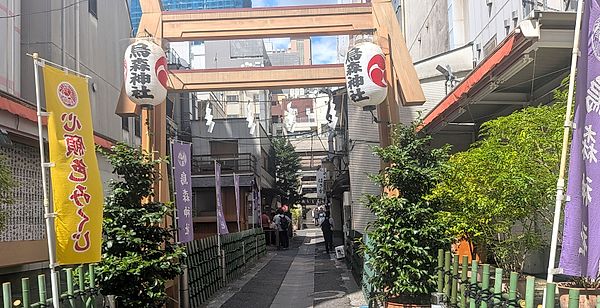
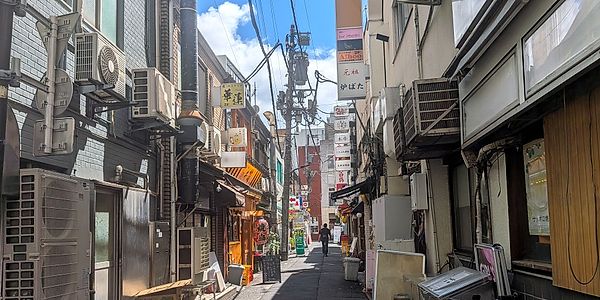
The name it gave up went to the station next door: Karasumori, opened on 16 December 1909. Karasumori was a place name. Shrine tradition holds that in 940, Fujiwara no Hidesato set out to build a shrine in thanks for victory over Taira no Masakado's revolt, and found, as a dream had told him he would, a wood where crows had gathered — karasu-mori. So today's Shimbashi Station began as the station of the crow wood. The name moved three hundred metres from east to west; the older name stayed with the shrine and the lanes around it. Everyone drinking on the west side of the station tonight is drinking inside a former station name.
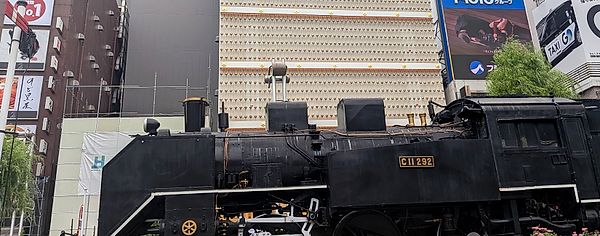
The Shiodome freight yard closed on 1 November 1986. Digging for the redevelopment that followed turned up the foundations of the first Shimbashi Station under the soil, and in 2003 the station building was put back on the same spot, wearing the face it had on its opening day. Meanwhile, in front of the station that had taken its name, a steam locomotive was set down in 1972 to mark a century of railways in Japan: C11 292, built in 1945, which spent its whole working life at the Himeji depot and never once ran through Tokyo. Around a locomotive that never came here, standing in front of a station that is no longer the first, people are still meeting each other today.