Tokyo

meguro

The road drops the moment you leave the station. Everything named Meguro lies at the bottom of the hill

Two roads run west from Meguro Station, and both fall away at once. Gyonin-zaka to the north drops about 150 metres at a gradient of 15.6 per cent; Gonnosuke-zaka to the south is a wide shopping street. Both end at the Meguro River. The station stands on a plateau, and its address is Kamiosaki in Shinagawa Ward โ€” the boundary with Meguro Ward runs along the top of a bluff about 100 metres to the west. Meguro Fudo, which gave the district its name, and Otori Shrine, said to be the oldest in the ward, are both down the hill and across the river. In 1772 a fire that started at a temple partway down that slope climbed it and spread into Edo.

Sightseeing

The Classics

Daienji Temple

Daienji Temple

4min walk

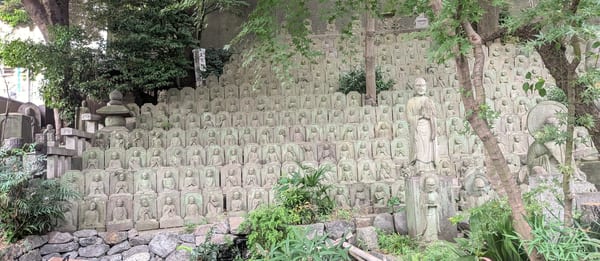
A Tendai temple partway down Gyonin-zaka. It is said to have been founded in the Kan'ei era by Daikai, an ascetic of Mount Yudono, and the slope takes its name from the ascetics who settled here. On the bank inside the grounds stand 520 stone figures, carved in the Tenmei era to mourn those who died in the 1772 Gyonin-zaka fire. They are a designated cultural property of Tokyo, and no two faces are alike.

๐Ÿ’ก Four minutes on foot, down Gyonin-zaka from the station. The stone figures are on the bank just inside the gate.
Meguro Fudo (Ryusenji Temple)

Meguro Fudo (Ryusenji Temple)

16min walk

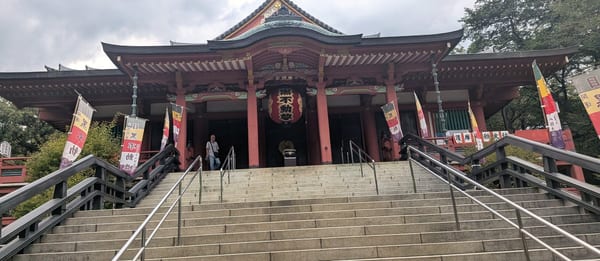
One of Edo's five coloured Fudo temples, and one of the several things the district's name has been traced to. A long flight of stone steps climbs from the approach to the main hall. Behind the grounds lies the grave of Aoki Konyo, who spread the sweet potato through Japan; it is a designated national historic site. The temple is down the hill from the station, across the river and on to the southwest.

๐Ÿ’ก 9:00โ€“16:30. Sixteen minutes on foot. The sweet potato festival is held every year on 28 October.

Tokyo Metropolitan Teien Art Museum

Tokyo Metropolitan Teien Art Museum

7min walk

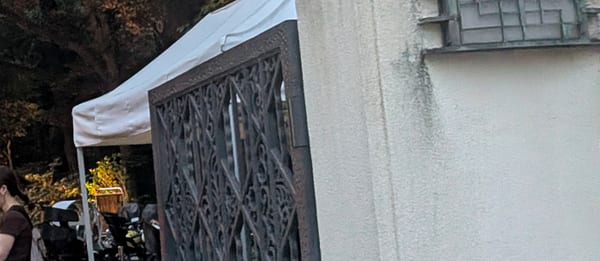
The former residence of Prince Asaka, built in 1933 and now used as a museum with the interior left intact. The prince and princess had spent time in France and brought Art Deco home with them; the ironwork of the front gate and the fittings inside are the original work. The garden is open as well. It stands east of the station, towards Shirokanedai.

๐Ÿ’ก 10:00โ€“18:00, closed Mondays. Seven minutes on foot. Between exhibitions only the building may be open.

Local Secrets

Gyonin-zaka Slope

Gyonin-zaka Slope

4min walk

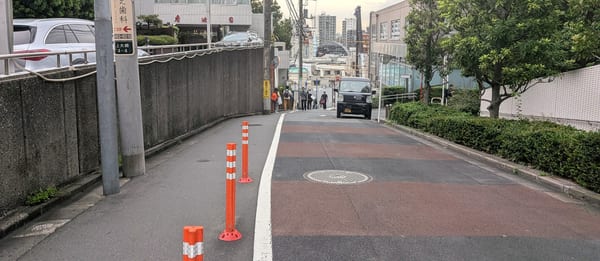
The slope running from the west side of Meguro Station down to the Meguro River. The graded section is about 150 metres long at 15.6 per cent, which is steep. The name is said to come from the ascetics who settled here after Daienji was founded in the Kan'ei era. The fire of 1772 climbed this slope on its way into Edo. At the bottom it meets Taikobashi bridge.

๐Ÿ’ก Four minutes on foot. Going down is easy; coming back means climbing the same slope.

O-Shichi's Well

O-Shichi's Well

5min walk

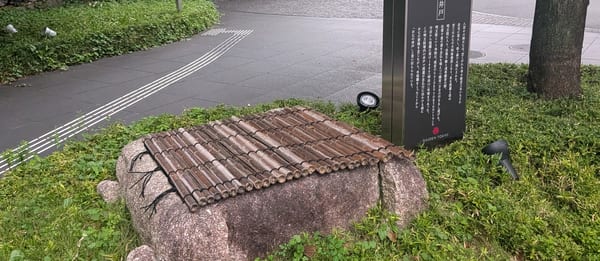
At the foot of Gyonin-zaka, on the grounds of Gajoen, the remains of a well survive. Kichiza, who had been the lover of O-Shichi the greengrocer's daughter, took vows after her death and took the name Saiun; he is said to have purified himself at the well of Myoo-in before setting out on his daily pilgrimage. Myoo-in stood in this area until around 1880.

๐Ÿ’ก Inside the Gajoen grounds. Only the stonework and a marker remain, and it is easy to walk past.

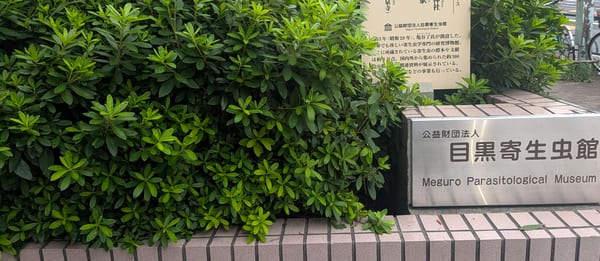
Meguro Parasitological Museum

Meguro Parasitological Museum

15min walk

A museum given over entirely to parasites. Specimens and documents fill two floors, and admission is free. The building on Meguro-dori is easy to miss, but there is nothing else like the collection anywhere, and a good share of the visitors are from abroad. It is about fifteen minutes southwest of the station, down the hill.

๐Ÿ’ก 10:00โ€“17:00, closed Mondays and Tuesdays (the next weekday if these fall on a holiday). Free admission. Fifteen minutes on foot.

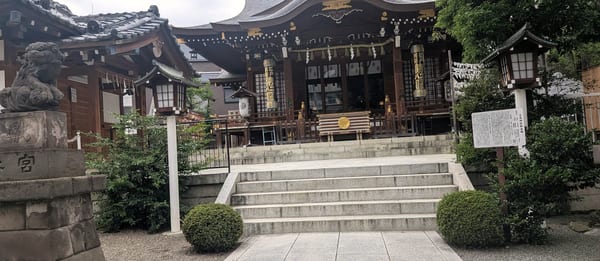
Otori Shrine

Otori Shrine

12min walk

A shrine on the corner where Meguro-dori meets Yamate-dori. Temple record puts the building of the hall at 806, which would make it the oldest in the ward. Its Tori-no-ichi fair in November is said to date from 1835, when a sake brewer in Shimomeguro had rakes brought over from Asakusa; few fairs in Tokyo have run continuously since Edo.

๐Ÿ’ก Shrine office 9:00โ€“16:00 (closed 12:30โ€“13:30). Twelve minutes on foot, on the way to Meguro Fudo.

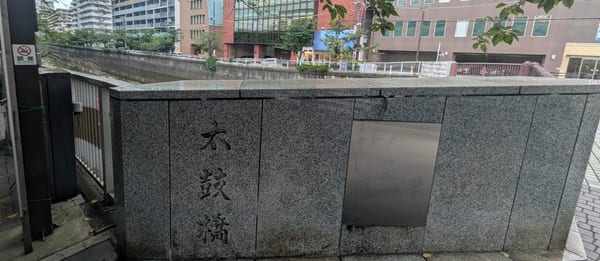
Taikobashi Bridge

Taikobashi Bridge

7min walk

The bridge over the Meguro River at the foot of Gyonin-zaka. The stone bridge that stood here in the Edo period was arched, as the name says, and Hiroshige drew it in his print of Meguro. The present bridge is flat and made of concrete; a stone plaque survives at one end.

๐Ÿ’ก Seven minutes on foot. The riverbank is lined with cherry trees and gets busy in spring.

Food & Drink

The Classics

Local Secrets

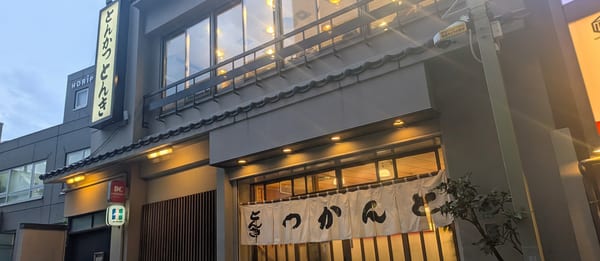
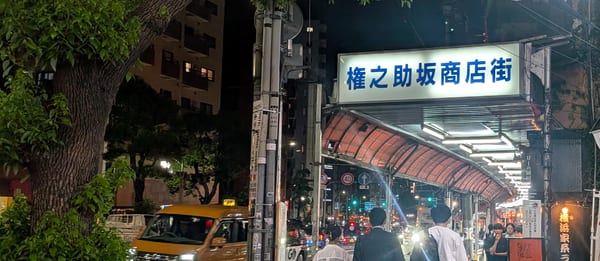
Gonnosuke-zaka Shotengai

Gonnosuke-zaka Shotengai

6min walk

The shopping street that follows Gonnosuke-zaka down and west from Meguro Station. Restaurants line both sides without a break all the way to the bottom. The lights come on in the evening and the arcade sign is lit.

๐Ÿ’ก About three minutes to the top of the slope. Coming back is uphill.

The Memory of This Town

The fire went up the hill

Step into the grounds of Daienji and you find stone figures ranged along the bank. There are 520 of them: three of the Shakyamuni triad, ten great disciples, sixteen arhats, and 491 more arhats besides. Come closer and you see that no two faces are the same. They were carved in the Tenmei era, in the 1780s. They commemorate nothing. They are there to mourn the people killed by a fire that had broken out at this temple about ten years before.

In the second month of the ninth year of Meiwa, fire broke out at Daienji. It went up Gyonin-zaka. The slope is the road onto the plateau, and at the top of it lies Edo. Carried by the wind, the fire spread northeast, crossed Nihonbashi and reached as far as Senju. It is counted, with the Meireki and Bunka fires, as one of the three great fires of Edo. Sources disagree on how many died, so no figure is given here. The shogunate would not allow the temple to be rebuilt, because the fire had started there. Daienji was not raised again until the first year of Kaei, under the patronage of Shimazu Narioki, lord of Satsuma โ€” seventy-six years after the fire.

The slope still falls at the same angle. A station stands at the top of it, a river runs at the foot, and the stone figures are ranged on the bank between. The landform that once carried fire into Edo now does nothing but shorten the breath of those who walk it. Go down the hill and there is Meguro Fudo, and Otori Shrine, and everything else that carries the name Meguro.

  • Daienji is said to have been founded in the Kan'ei era (1624โ€“44) by Daikai, an ascetic of Mount Yudono. The slope takes its name from those ascetics.
  • It was the origin of the Gyonin-zaka fire of the second month of Meiwa 9 (1772), and the shogunate refused permission to rebuild. The temple was raised again in Kaei 1 (1848) under the patronage of Shimazu Narioki, lord of Satsuma โ€” seventy-six years after the fire.
  • The Daienji stone figures number 520 (3 of the Shakyamuni triad, 10 great disciples, 16 arhats, 491 further arhats), carved in the Tenmei era (1780s) to mourn those killed in the fire. A designated tangible cultural property of Tokyo (historical materials). Source: Meguro Ward.
  • Sources differ widely on the number of dead, so no figure is given in the text (the same treatment as the former clothing depot at Ryogoku).
  • The Meiwa fire is counted, with the Meireki and Bunka fires, as one of the three great fires of Edo.

Through the Year

  1. Sepa Sunday early in the month

    Meguro Sanma Festival

    Meguro Station shotengai

    A festival named for the rakugo story 'The Pike of Meguro'. The youth section of the station-front shopping association runs it, grilling pike sent from Miyako in Iwate over charcoal and giving it away free, with a rakugo performance alongside. Note that Meguro Ward holds its own citizens' festival in autumn where grilled pike is also handed out. The names are similar, but the organisers and the venue are different, so check which date you mean.

  2. Octthe 28th

    Kansho Sweet Potato Festival

    Meguro Fudo (Ryusenji)

    Held in memory of Aoki Konyo, whose grave lies behind the main hall. Konyo spread the cultivation of the sweet potato and established it across the Kanto plain as a hedge against famine, which earned him the name of the sweet potato teacher. He died on 12 October, but the festival falls on the 28th, the temple's own feast day. Stalls selling sweet potatoes and candied sweet potatoes fill the grounds.

  3. Novthe days of the rooster

    Tori-no-ichi Fair

    Otori Shrine

    The fair held on the days of the rooster in November. It is said to have begun in 1835, when a sake brewer in Shimomeguro had rakes brought over from Asakusa, and it is one of the few in Tokyo running continuously since Edo. Stalls stand from morning until night, and in the evening kagura and the dance of the rake are performed at the hall. Depending on the year there are two such days, or three.

Dates shift from year to year. Check the shrine or organiser before you plan around one.

Where to Stay

Gajoen Tokyo

Gajoen Tokyo

5min walk

A hotel at the foot of Gyonin-zaka. Its wooden Hyakudan Kaidan, built in 1935, survives as a designated cultural property of Tokyo. The property closed at the end of September 2025, when it stopped trading as Hotel Gajoen Tokyo, and reopened on 27 July 2026 as Gajoen Tokyo.

๐Ÿ’ก Five minutes on foot. We have not been able to confirm whether the Hyakudan Kaidan is open to the public, so ask ahead if that is why you are going. O-Shichi's Well is on the grounds.

Getting to Meguro

  • From Shibuya

    5 min ยท direct ยท JR Yamanote Line ยท ยฅ200

  • From Shinjuku

    12 min ยท direct ยท JR Yamanote Line ยท ยฅ210

  • From Tokyo Station

    21 min ยท direct ยท JR Yamanote Line ยท ยฅ260Take the Yamanote outer loop (toward Shinagawa and Shibuya). The inner loop goes the long way round and takes more than twice as long.

  • From Ueno

    29 min ยท direct ยท JR Yamanote Line ยท ยฅ260Outer loop again (toward Tokyo and Shinagawa). Going inner loop via Ikebukuro and Shinjuku is the long way round.

  • From Ikebukuro

    21 min ยท direct ยท JR Yamanote Line ยท ยฅ260From Ikebukuro it is the other way: take the inner loop (toward Shinjuku and Shibuya).

  • From Shinagawa

    8 min ยท direct ยท JR Yamanote Line ยท ยฅ200Three stops, via Osaki and Gotanda.

  • From Narita Airport

    117 min ยท 1 transfer ยท Keisei Access Express โ†’ JR Yamanote Line ยท ยฅ1,820The Narita Express does not stop at Meguro. The Keisei Access Express runs through to Shinagawa via the Toei Asakusa and Keikyu lines, so Shinagawa is the only change.

  • From Haneda Airport

    34 min ยท 1 transfer ยท Tokyo Monorail (Airport Rapid) โ†’ JR Yamanote Line ยท ยฅ730Take the monorail to Hamamatsucho, then change to the JR Yamanote outer loop.

Times are for a typical daytime weekday and fares are ordinary tickets, rounded. Both change โ€” check a route planner on the day.

Getting There

Meguro is served by the JR Yamanote Line together with the Tokyu Meguro Line, the Tokyo Metro Namboku Line and the Toei Mita Line. The two subway lines terminate here and run through onto the Tokyu Meguro Line, so Shirokanedai and Shirokane-takanawa connect to Musashi-koyama and Hiyoshi without a change. On the Yamanote the direction matters a great deal: take the outer loop from Tokyo, Ueno and Shinagawa, and the inner loop from Ikebukuro, Shinjuku and Shibuya. Board the wrong one and you go the long way round. Gyonin-zaka, Gonnosuke-zaka and Gajoen are on the west side of the station; the Teien Art Museum is on the east.

Best Time to Visit

The temples and shrines all close in the late afternoon. Meguro Fudo runs 9:00 to 16:30, and the shrine office at Otori closes at 16:00. The Parasitological Museum opens 10:00 to 17:00 and shuts on Mondays and Tuesdays; the Teien Art Museum also closes on Mondays, so a Monday visit loses much of what there is to see. The Gonnosuke-zaka shopping street comes to life after dark, when the restaurants open. The riverbank at the bottom of the hill is lined with cherry trees, and in that season the crowds are of a different order.Autumn brings a run of festivals: the sanma festival in September, the sweet potato festival on 28 October and the Tori-no-ichi fair in November (see the calendar below).

Local Tip

Plan around the gradient. Most of what you are heading for sits below the station, so the outward walk is downhill and the return is a climb. Meguro Fudo, the Parasitological Museum and Otori Shrine are twelve to sixteen minutes away and all lie in the same southwesterly direction, so it is worth walking them as one round. Gajoen closed at the end of September 2025, when it stopped trading as Hotel Gajoen Tokyo, and reopened on 27 July 2026. We have not been able to confirm whether the Hyakudan Kaidan, a designated cultural property of Tokyo, is open to the public, so ask ahead if that is the reason you are going.

What the Name Means

The origin is disputed. The ward's own history favours meguro as me, for horse, and kuro, for the ridge between fields โ€” this was grazing country, and keepers rode the ridges to check the herds. Others read it as a landform, hollow and ridge, or trace it to the Meguro Fudo temple. Nothing is settled.