TOKYO STATION GUIDE

Another Tokyo, just past the backstreets.

From must-see landmarks to alleys guidebooks walk right past — Backstreet Journey helps you explore Tokyo one station at a time.

Local secrets make the best travel stories

Every travel site recommends the same spots. We care about what residents tell only their friends: standing bars that open at 10 a.m., an upside-down Skytree reflected in a canal, rice crackers grilled over charcoal.

The classics, done right

The unmissable sights, distilled to what matters — even on your first visit.

Only genuine hidden gems

Not in guidebooks, few tourists — that is our bar for calling something a local secret.

In six languages

English, Japanese, Korean, Simplified and Traditional Chinese, and Thai.

Tokyo BackstreetsEvery station's Local Secrets, in one list

Choose a station

Area
Line
Akihabara
Akihabara

秋葉原

There is no Akiba shrine in Akihabara. The one the district is named for was moved three kilometres away in 1888, to make room for the railway.

JR Yamanote LineJR Sobu LineHibiya Line
Asakusa
Asakusa

浅草

A temple founded in 628 around a figure two fishermen pulled from the river. The buildings you see around it are all reconstructions.

Ginza LineToei Asakusa LineTobu Skytree Line
Asakusabashi
Asakusabashi

浅草橋

Neither the gate nor the bridge was ever in Asakusa; both stood on the road that led there. The doll wholesalers have been on this ground for three centuries.

JR Sobu LineToei Asakusa Line
Ginza
Ginza

銀座

The silver mint that gave the district its name moved away in 1801. The willows came later, and only because they were the one tree the high water would not kill.

Ginza LineMarunouchi LineHibiya Line
Hamamatsucho
Hamamatsucho

浜松町

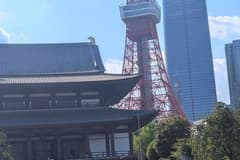
Twenty-four minutes to Haneda, twenty-four hours to the islands — the station that faces the sea

JR Yamanote LineJR Keihin-Tohoku LineTokyo Monorail
Harajuku
Harajuku

原宿

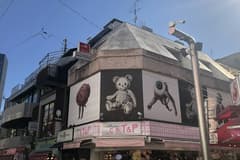
For nearly twenty years, what is now Yoyogi Park was an American housing estate of 827 houses that you could not enter.

JR Yamanote LineChiyoda Line
Kamata
Kamata

蒲田

A shitamachi district that once made films, still working as a gateway to Haneda

JR Keihin-Tohoku LineTokyu Ikegami LineTokyu Tamagawa Line
Kameido
Kameido

亀戸

Kamejima was an island of silt at the river mouth, said to be shaped like a turtle. The channels filled in long ago and the name is the only part left.

JR Sobu LineTobu Kameido Line
Kinshicho
Kinshicho

錦糸町

The canal the district is named after has been filled in — the one where a voice was said to come out of the water and tell you to leave the fish behind.

JR Sobu LineHanzomon Line
Kita Senju

北千住

The first post town on the Oshu highway, north of the Arakawa. Basho set out for the north from here, and the drinking alleys off the west exit are still narrow.

JR Joban LineHibiya LineChiyoda Line
Meguro
Meguro

目黒

The road drops the moment you leave the station. Everything named Meguro lies at the bottom of the hill

JR Yamanote LineTokyu Meguro LineToei Mita Line
Nakano
Nakano

中野

A building that grew out of a two-tsubo bookshop, and the ground that once held a hundred thousand dogs. Both are north of Nakano Station

JR Chuo LineTozai Line
Ningyocho
Ningyocho

人形町

Edo kabuki began here. The theatres were moved to Asakusa by the Tempo reforms, and what stayed behind was the name of the souvenir — dolls

Hibiya LineToei Asakusa LineHanzomon LineToei Shinjuku Line
Nishiogikubo
Nishiogikubo

西荻窪

A hollow where reeds grew, until the station opened in 1922. The antique shops are not on the main street — they are in the lanes behind it.

JR Chuo Line
Oshiage
Oshiage

押上

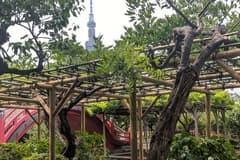
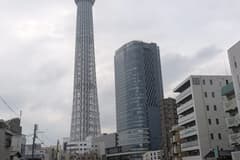
Until 2012 the station at the foot of the tower was called Narihira-bashi, after a poet who stopped at this river and asked a bird about the city he had left.

Hanzomon LineToei Asakusa LineKeisei Oshiage Line
Roppongi
Roppongi

六本木

Six trees, or six households whose names carried the character for tree. Neither account has been proved, and no tree is left to settle it.

Hibiya LineToei Oedo Line
Ryogoku
Ryogoku

両国

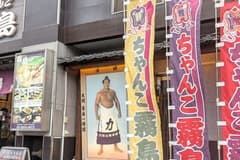
Two provinces, joined by a bridge after the fire of 1657. At the centre of the district is a park that exists because of what happened on the ground it covers.

JR Sobu LineToei Oedo Line
Shibuya
Shibuya

渋谷

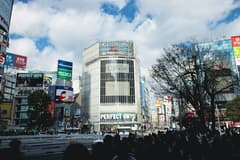
A brook from a school song of 1912 still runs under these streets, culverted. The crowd on the crossing is walking on top of it.

JR Yamanote LineGinza LineHanzomon Line
Shimbashi
Shimbashi

新橋

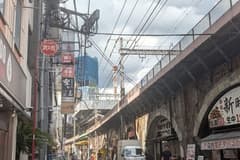
Where Japan's first railway departed. The bars now fill the arches and the alleys, and SL Plaza is where television goes to interview drunk office workers

JR Yamanote LineGinza LineToei Asakusa Line
Shimokitazawa
Shimokitazawa

下北沢

The lower reach of a stream called Kitazawa. The stream is culverted now and survives as a green walkway; Kami-Kitazawa is simply the top of the same water.

Odakyu LineKeio Inokashira Line
Shinagawa
Shinagawa

品川

Named Shinagawa, addressed in Minato Ward — the old post town is a kilometre from here

JR Yamanote LineJR Tokaido LineKeikyu Main Line
Shinjuku
Shinjuku

新宿

A post town that townsmen paid the shogunate for the right to build, in 1697, because the first stage out of Nihonbashi had been set too far away.

JR Yamanote LineJR Chuo LineMarunouchi LineToei Shinjuku Line
Sugamo
Sugamo

巣鴨

The Jizo at the centre of this district is never shown. By the temple's own account the image was taken from a seal less than three centimetres across.

JR Yamanote LineToei Mita Line
Tateishi
Tateishi

立石

The town is named after a rock in a children's playground. It is tuff quarried across the bay in Chiba, and only a little of it now shows above the soil.

Keisei Oshiage Line
Togoshi Ginza
Togoshi Ginza

戸越銀座

The shopping street was paved in 1927 with the stone Ginza tore up after the earthquake, and took the name along with the bricks.

Tokyu Ikegami LineToei Asakusa Line
Ueno
Ueno

上野

For most of the twentieth century this was where the north of Japan arrived in Tokyo — the overnight trains terminated here and everyone walked straight out.

JR Yamanote LineGinza LineHibiya Line
Yanesen
Yanesen

谷根千

Not on any map. The name is a contraction of three neighbourhoods, coined in 1984 by a quarterly magazine the residents started themselves.

Chiyoda LineJR Yamanote Line